One question that often arises in maritime circles is whether it’s beneficial—or detrimental—for a vessel to prominently display a company’s name or logo. Branding, after all, is a powerful tool. But when it comes to shipping, especially in the context of accidents or incidents, the implications of visible branding can be far-reaching and complex.
There is no universal answer to this question. The decision to brand a vessel depends largely on a company’s priorities, the nature of its operations, and how much visibility—or anonymity—it’s willing to risk.
Let’s take a look at some recent examples to explore the nuances.
Evergreen and the Ever Given
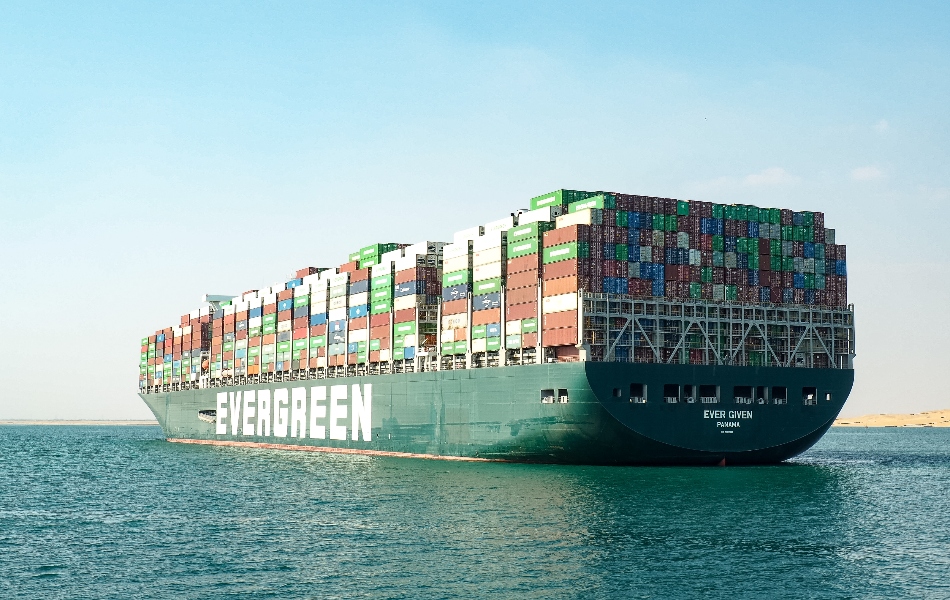
Perhaps one of the most high-profile maritime incidents of recent years was the grounding of the Ever Given in the Suez Canal. The vessel bore the massive, unmistakable branding of Evergreen—its charterer—with the name painted boldly along both sides in Evergreen’s signature white and green. To the public eye, Ever Given appeared to be an Evergreen ship.
Legally, Evergreen didn’t own the ship; it merely chartered it. But that distinction was largely lost in public discourse. Evergreen’s name dominated headlines and media coverage. The actual response to the incident was managed primarily by the technical manager and, to a lesser extent, the vessel’s owner—both of whom were mentioned in coverage, but not as prominently as Evergreen.
The Dali and the Baltimore Bridge collapse
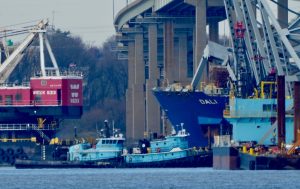
Contrast this with the more recent case of the Dali, which collided with Baltimore’s Francis Scott Key Bridge, leading to a catastrophic collapse. Notably, Dali bore no significant visible branding. While the charterer was named in some reporting, its presence was far more muted than in the Ever Given case.
At first glance, this might seem like a strategic win for the charterer—it sidestepped the brunt of the public scrutiny. However, the lack of branding also limited the charterer’s ability to steer the narrative or offer a reassuring public presence in the aftermath. In a crisis, visibility can be a liability, but it can also be a tool for influence.
The Exxon Valdez legacy
To understand how lasting the impact of vessel branding can be, one need only look back to the Exxon Valdez disaster. Decades later, the name “Exxon” is still indelibly linked with the oil spill in Prince William Sound, Alaska, despite countless efforts at rebranding and corporate distancing. The incident serves as a cautionary tale of how branding a vessel can embed a company into the long-term memory of a disaster.
So why brand at all?
Given these risks, why would a company ever choose to “risk” putting its name on the side of a ship?
The answer lies in trust, reputation, and relationship-building. Branding is a declaration: of confidence in the vessel, of pride in the company’s standards, and of commitment to a level of service. It signals permanence, presence, and accountability.
To draw a parallel from aviation, I recently flew from London to Cyprus on a flight sold by British Airways. But the aircraft, a charter operated by an unknown airline, was entirely unbranded—just plain white. The interior was grey and orange, vaguely reminiscent of EasyJet. Despite the ticket saying British Airways, nothing about the experience felt like it. And while the service was perfectly fine, I had a moment of pause. There was a trace of scepticism—an unease I wouldn’t feel on a fully branded British Airways flight. Branding matters.
Commodities vs. Relationships
Vessels in the liner trade—such as container ships or Ró-Ró vessels—often transport high-value or branded goods and operate on fixed schedules with long-term customers. For these vessels, branding reinforces the identity of the service and the reliability of the provider. In contrast, dry bulk vessels transporting grain, coal, or other commodities more often operate in spot markets and carry anonymous cargo. For them, branding is less relevant.
This distinction reflects the nature of the business: commoditised versus relationship-based. Where services are interchangeable and cost is king, anonymity may be preferable. But in sectors where trust, continuity, and reputation matter more than just price, then branding becomes a key part of the value proposition.
Final thoughts
Visible branding on a vessel is a double-edged sword. It can expose a company to greater risk during a crisis—but it can also position that company as a leader, a trusted name, and a reliable partner. Ultimately, it’s a strategic choice that must balance public relations risk with the desire to project confidence and build long-term relationships.